
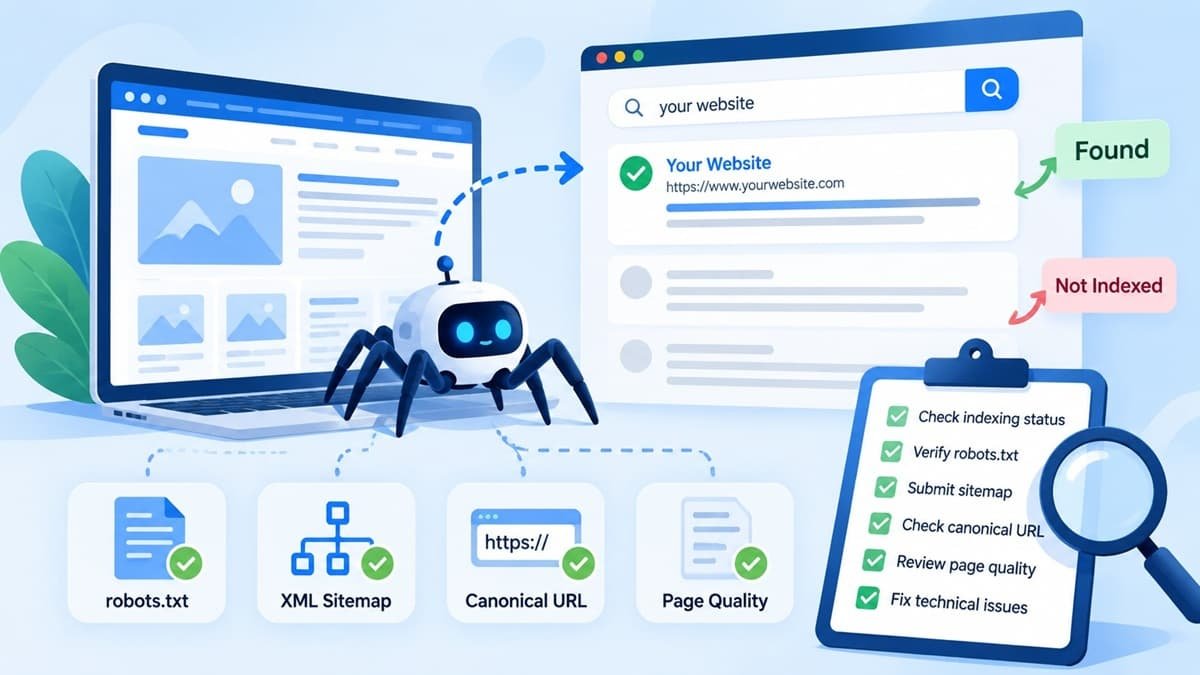
AI systems use different retrieval, ranking and generation systems, and there is no guaranteed method for making a website appear in every AI-generated answer.
But there are practical things you can do to make your website easier to understand and more useful as a source.
1. Start with useful information
The first mistake is thinking about AI citations before thinking about readers.
If your article exists only because you want an AI system to mention your brand, the content may not be very useful.
Instead, create pages that genuinely answer questions.
For example, instead of:
“Why SiteAuditScan Is the Best Website Audit Tool”
create:
“What Should You Check Before Launching a Website?”
The second topic has a clear user purpose.
Google’s guidance similarly emphasizes people-first content that provides original information, useful analysis and a satisfying experience rather than content created primarily to manipulate search rankings.
2. Answer the question clearly
Don’t hide the main answer underneath five paragraphs of introduction.
If someone asks:
“What causes a slow website?”
start with a clear explanation.
Then expand:
- Large images
- Render-blocking resources
- Excessive JavaScript
- Slow server response
- Third-party scripts
- Poor caching
- Inefficient database queries
Clear structure helps humans understand the article and makes the subject matter easier for machines to interpret.
3. Build topic depth
Suppose your website has one article about SEO.
Now compare that with a website containing useful articles about:
- Technical SEO
- Indexing
- Canonical URLs
- Robots.txt
- XML sitemaps
- Internal linking
- Structured data
- Core Web Vitals
- Duplicate content
- Search Console
The second website demonstrates much more topical coverage.
That doesn’t mean you should create hundreds of thin articles.
Create articles because they answer real questions your audience has.
4. Make your organization easy to understand
AI systems need to understand what a website represents.
Clearly explain:
- Who operates the website
- What the organization does
- What the website provides
- Who the content is for
- How users can contact the organization
Your About page is useful here.
So are consistent organization details and appropriate structured data.
5. Use clear authorship
Don’t hide who created your articles.
A useful article can include:
Written by: Author Name
Reviewed by: Reviewer Name, where applicable
Published: Date
Updated: Date
Then link the author name to a genuine author profile.
Google explicitly recommends accurate authorship information and warns against fabricated author profiles or credentials.
6. Add structured data correctly
Structured data helps search engines understand what your page represents.
For an article, you can use Article or BlogPosting structured data.
Useful properties can include:
- Headline
- Description
- Image
- Author
- Publisher
- Publication date
- Modification date
- Main entity
For your organization, use appropriate Organization markup.
But structured data isn’t a magic button that guarantees AI citations.
It is simply a structured way of communicating information about your content.
7. Make claims easy to verify
Suppose your article says:
“Website speed affects user experience.”
That’s a broad statement.
Instead of making unsupported claims, explain what you mean and link to authoritative documentation where appropriate.
For technical topics, useful sources can include:
- Google Search Central
- W3C
- MDN
- Official browser documentation
- Official product documentation
- Industry standards
This makes your article more useful to readers.
8. Include original experience
This is one of the biggest opportunities for a technical website.
Don’t only explain:
“Compress your images.”
Show a practical example.
For example:
Before: 4.2 MB hero image
After: 420 KB optimized image
Then explain:
- What format you used
- What changed
- What problem it solved
- What trade-offs existed
First-hand examples make content more useful than generic summaries.
9. Create answer-friendly headings
Good headings could be:
Why is my website slow?
How do I check my Core Web Vitals?
What does a noindex tag do?
Why isn’t Google indexing my page?
How can I check broken links?
These headings match the questions people actually ask.
10. Don’t write specifically for AI citations
There is an important distinction.
You shouldn’t write:
“AI, please cite my website.”
Write:
“Here is the clearest answer to this problem, with evidence and practical examples.”
If your content is genuinely useful, it has a stronger foundation for being discovered and referenced.
11. Don’t create dozens of nearly identical pages
Imagine creating:
- Best SEO Audit
- Top SEO Audit
- SEO Audit Guide
- SEO Audit Tips
- SEO Audit Checklist
- SEO Audit Tool
- SEO Audit Software
- SEO Audit Service
and making every article say almost the same thing.
That doesn’t create a strong resource.
Instead, build a small collection of genuinely different articles that answer different user needs.